

About Us
HI nanba, we are the official crew of KTG
As you can see the topics which we have spoken about in our latest videos.
The use of this site is you can learn more about the topic.

Our Services
Here’s What We Provide
Order something, which can develop your iq
We want all of our customers to experience the impressive level of professionalism when working with Koushik tells gk - your mini encyclopedia. All of our services, especially this one, exist to make your life easier and stress free. You can trust us to supply you with the best products, as well as top quality customer service.


Opening Hours
Come Visit
Opens on Wednesday
Closes on Thursday
Cause we are busy
Last Edition
Enjoy more content by reading our articles.
Koushik Tells Gk - Your mini Encyclopedia, designed to improve iq.
which is a non profit motive. - Director Ktg.
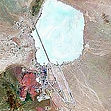
Area 51
A dark project?
Area 51 is the common name of a highly classified United States Air Force (USAF) facility located within the Nevada Test and Training Range. A remote detachment administered by Edwards Air Force Base, the facility is officially called Homey Airport (KXTA) or Groom Lake, named after the salt flat situated next to its airfield. Details of the facility's operations are not publicly known, but the USAF says that it is an open training range,[1] and it most likely supports the development and testing of experimental aircraft and weapons systems.[2][1] The USAF acquired the site in 1955, primarily for flight testing the Lockheed U-2 aircraft.[3]
The intense secrecy surrounding the base has made it the frequent subject of conspiracy theories and a central component of unidentified flying object (UFO) folklore.[4][5] The base has never been declared a secret base, but all research and occurrences in Area 51 are Top Secret/Sensitive Compartmented Information (TS/SCI).[4] The CIA publicly acknowledged the existence of the base for the first time on June 25, 2013, following a Freedom of Information Act (FOIA) request filed in 2005, and they declassified documents detailing the history and purpose of Area 51.[6]
Area 51 is located in the southern portion of Nevada in the western United States, 83 miles (134 km) north-northwest of Las Vegas. The surrounding area is a popular tourist destination, including the small town of Rachel on the "Extraterrestrial
The origin of the name "Area 51" is unclear. It is believed to be from an Atomic Energy Commission (AEC) numbering grid, although Area 51 is not part of this system; it is adjacent to Area 15. Another explanation is that 51 was used because it was unlikely that the AEC would use the number.[13] According to the Central Intelligence Agency (CIA), the correct names for the facility are Homey Airport (KXTA) and Groom Lake,[14][15] though the name Area 51 was used in a CIA document from the Vietnam War.[16] The facility has also been referred to as Dreamland and Paradise Ranch,[17][18] among other nicknames. The USAF public relations has referred to the facility as "an operating location near Groom Dry Lake". The special use airspace around the field is referred to as Restricted Area 4808 North (R-4808N).[19]
Lead and silver were discovered in the southern part of the Groom Range in 1864,[20] and the English company Groome Lead Mines Limited financed the Conception Mines in the 1870s, giving the district its name (nearby mines included Maria, Willow, and White Lake).[21] J. B. Osborne and partners acquired the interests in Groom in 1876, and his son acquired the interests in the 1890s.[21] Mining continued until 1918, then resumed after World War II until the early 1950s.[21]
The airfield on the Groom Lake site began service in 1942 as Indian Springs Air Force Auxiliary Field[22] and consisted of two unpaved 5,000-foot runways at 37°16′35″N 115°45′20″W.[23]
Highway".
The origin of the name "Area 51" is unclear. It is believed to be from an Atomic Energy Commission (AEC) numbering grid, although Area 51 is not part of this system; it is adjacent to Area 15. Another explanation is that 51 was used because it was unlikely that the AEC would use the number.[13] According to the Central Intelligence Agency (CIA), the correct names for the facility are Homey Airport (KXTA) and Groom Lake,[14][15] though the name Area 51 was used in a CIA document from the Vietnam War.[16] The facility has also been referred to as Dreamland and Paradise Ranch,[17][18] among other nicknames. The USAF public relations has referred to the facility as "an operating location near Groom Dry Lake". The special use airspace around the field is referred to as Restricted Area 4808 North (R-4808N).[19]
Lead and silver were discovered in the southern part of the Groom Range in 1864,[20] and the English company Groome Lead Mines Limited financed the Conception Mines in the 1870s, giving the district its name (nearby mines included Maria, Willow, and White Lake).[21] J. B. Osborne and partners acquired the interests in Groom in 1876, and his son acquired the interests in the 1890s.[21] Mining continued until 1918, then resumed after World War II until the early 1950s.

Water
What is water
Water is an inorganic, transparent, tasteless, odorless, and nearly colorless chemical substance, which is the main constituent of Earth's hydrosphere and the fluids of all known living organisms. It is vital for all known forms of life, even though it provides no calories or organic nutrients. Its chemical formula is H2O, meaning that each of its molecules contains one oxygen and two hydrogen atoms, connected by covalent bonds.
"Water" is the name of the liquid state of H2O at standard ambient temperature and pressure. It forms precipitation in the form of rain and aerosols in the form of fog. Clouds are formed from suspended droplets of water and ice, its solid state. When finely divided, crystalline ice may precipitate in the form of snow. The gaseous state of water is steam or water vapor. Water moves continually through the water cycle of evaporation, transpiration (evapotranspiration), condensation, precipitation, and runoff, usually reaching the sea.
Water covers 71% of the Earth's surface, mostly in seas and oceans.[1] Small portions of water occur as groundwater (1.7%), in the glaciers and the ice caps of Antarctica and Greenland (1.7%), and in the air as vapor, clouds (formed of ice and liquid water suspended in air), and precipitation (0.001%).[2][3]
Water plays an important role in the world economy. Approximately 70% of the freshwater used by humans goes to agriculture.[4] Fishing in salt and fresh water bodies is a major source of food for many parts of the world. Much of the long-distance trade of commodities (such as oil, natural gas, and manufactured products) is transported by boats through seas, rivers, lakes, and canals. Large quantities of water, ice, and steam are used for cooling and heating, in industry and homes. Water is an excellent solvent for a wide variety of substances both mineral and organic; as such it is widely used in industrial processes, and in cooking and washing. Water, ice and snow are also central to many sports and other forms of entertainment, such as swimming, pleasure boating, boat racing, surfing, sport fishing, diving, ice skating and skiing.

Covid 19
Corona pandemic!
The COVID-19 pandemic in India is part of the worldwide pandemic of coronavirus disease 2019 (COVID-19) caused by severe acute respiratory syndrome coronavirus 2 (SARS-CoV-2). The first case of COVID-19 in India, which originated from China, was reported on 30 January 2020. India currently has the largest number of confirmed cases in Asia,[8] and has the second-highest number of confirmed cases in the world after the United States,[9][10] with the number of total confirmed cases breaching the 100,000 mark on 19 May, [11] and 1,000,000 confirmed cases on 17 July 2020. On 29 August 2020, India recorded the global highest spike in COVID-19 cases on a day with 78,761 cases surpassing the previous global highest daily spike of 77,368 cases which was recorded in the US on 17 July 2020.[12][13]
India's case fatality rate is among the lowest in the world at 2.41% as of 23 July and is steadily declining.[14] By mid-May 2020, six cities accounted for around half of all reported cases in the country – Mumbai, Delhi, Ahmedabad, Chennai, Pune and Kolkata.[15] As of 24 May 2020, Lakshadweep is the only region which has not reported a case. On 10 June, India's recoveries exceeded active cases for the first time.[16]
On 22 March, India observed a 14-hour voluntary public curfew at the instance of Prime Minister Narendra Modi. It was followed by mandatory lockdowns in COVID-19 hotspots and all major cities. Further, on 24 March, the prime minister ordered a nationwide lockdown for 21 days, affecting the entire 1.3 billion-person population of India. On 14 April, India extended the nationwide lockdown till 3 May which was followed by two-week extensions starting 3 and 17 May with substantial relaxations. From 1 June, the government started "unlocking" the country (barring "containment zones") in three unlock phases.[17][18][19][20]
In March, after the lockdown was imposed, the United Nations (UN) and the World Health Organization (WHO) praised India's response to the pandemic as 'comprehensive and robust,' terming the lockdown restrictions as 'aggressive but vital' for containing the spread and building necessary healthcare infrastructure. At the same time, the Oxford COVID-19 Government Response Tracker (OxCGRT) noted the government's swift and stringent actions, emergency policy-making, emergency investment in health care, fiscal stimulus, investment in vaccine and drug R&D and gave India a score of 100 for the strict response. Also in March, Michael Ryan, chief executive director of the WHO's health emergencies programme noted that India had tremendous capacity to deal with the outbreak owing to its vast experience in eradicating smallpox and polio.[21][22][23] Other commentators have raised concerns about the economic fallout arising as a result of the pandemic and preventive restrictions.[24][25] The lockdown was justified by the government and other agencies for being preemptive to prevent India from entering a higher stage which could make handling very difficult and cause even more losses thereafter

Simulation Theory
Are we all in simulation?
The simulation hypothesis or simulation theory is the proposal that all of reality, including the Earth and the rest of the universe, could in fact be an artificial simulation, such as a computer simulation. Some versions rely on the development of a simulated reality, a proposed technology that would be able to convince its inhabitants that the simulation was "real". The simulation hypothesis bears a close resemblance to various other skeptical scenarios from throughout the history of philosophy. The hypothesis was popularized in its current form by Nick Bostrom. The suggestion that such a hypothesis is compatible with all of our perceptual experiences is thought to have significant epistemological consequences in the form of philosophical skepticism. Versions of the hypothesis have also been featured in science fiction, appearing as a central plot device in many stories and films.
You can get updates on this site, regularly every month.

Monkeys
What are monkeys?
Monkey is a common name that may refer to groups or species of mammals, in part, the simians of infraorder Simiiformes. The term is applied descriptively to groups of primates, such as families of New World monkeys and Old World monkeys. Many monkey species are tree-dwelling (arboreal), although there are species that live primarily on the ground, such as baboons. Most species are also active during the day (diurnal). Monkeys are generally considered to be intelligent, especially the Old World monkeys of Catarrhini.
Simians and tarsiers emerged within haplorrhines some 60 million years ago. New World monkeys and catarrhine monkeys emerged within the simians some 35 million years ago. Old World monkeys and Hominoidea emerged within the catarrhine monkeys some 25 million years ago. Extinct basal simians such as Aegyptopithecus or Parapithecus [35-32 million years ago], eosimiidea and sometimes even the Catarrhini group are also considered monkeys by primatologists.
Lemurs, lorises, and galagos are not monkeys; instead they are strepsirrhine primates. Like monkeys, tarsiers are haplorhine primates; however, they are also not monkeys.
Apes emerged within "monkeys" as sister of the Cercopithecidae in the Catarrhini, so cladistically they are monkeys as well. There has been resistance to directly designate apes (and thus humans) as monkeys, so "Old World monkey" may be taken to mean the Cercopithecoidea or the Catarrhini.That apes are monkeys was already realized by Georges-Louis Leclerc, Comte de Buffon in the 18th century.
Monkeys, including apes, can be distinguished from other primates and a lack of sensory whiskers

Kangaroos
Australia's special
The kangaroo is a marsupial from the family Macropodidae (macropods, meaning "large foot"). In common use the term is used to describe the largest species from this family, the red kangaroo, as well as the antilopine kangaroo, eastern grey kangaroo, and western grey kangaroo.[1] Kangaroos are indigenous to Australia and New Guinea. The Australian government estimates that 34.3 million kangaroos lived within the commercial harvest areas of Australia in 2011, up from 25.1 million one year earlier.[2]
As with the terms "wallaroo" and "wallaby", "kangaroo" refers to a paraphyletic grouping of species. All three refer to members of the same taxonomic family, Macropodidae, and are distinguished according to size. The largest species in the family are called "kangaroos" and the smallest are generally called "wallabies". The term "wallaroos" refers to species of an intermediate size.[3] There are also the tree-kangaroos, another type of macropod, which inhabit the tropical rainforests of New Guinea, far northeastern Queensland and some of the islands in the region. A general idea of the relative size of these informal terms could be:
wallabies: head and body length of 45–105 cm and tail length of 33–75 cm; the dwarf wallaby (the smallest of all known macropod species) is 46 cm long and weighs 1.6 kg;
tree-kangaroos: ranging from Lumholtz's tree-kangaroo: body and head length of 48–65 cm, tail of 60–74 cm, weight of 7.2 kg (16 lb) for males and 5.9 kg (13 lb) for females; to the grizzled tree-kangaroo: length of 75–90 cm (30 to 35 in) and weight of 8–15 kg (18–33 lb);
wallaroos: the black wallaroo (the smallest of the two species) with a tail length of 60–70 cm and weight of 19–22 kg (41.8–48.5 lb) for males and 13 kg (28.6 lb) for females;
kangaroos: a large male can be 2 m (6 ft 7 in) tall and weigh 90 kg (200 lb).
Kangaroos have large, powerful hind legs, large feet adapted for leaping, a long muscular tail for balance, and a small head. Like most marsupials, female kangaroos have a pouch called a marsupium in which joeys complete postnatal development.
The large kangaroos have adapted much better than the smaller macropods to land clearing for pastoral agriculture and habitat changes brought to the Australian landscape by humans. Many of the smaller species are rare and endangered, while kangaroos are relatively plentiful.
The kangaroo is a symbol of Australia, appears on the Australian coat of arms[4] and on some of its currency,[5] and is used as a logo for some of Australia's most well-known organisations, such as Qantas,[6] and as the roundel of the Royal Australian Air Force.[7] The kangaroo is important to both Australian culture and the national image, and consequently there are numerous popular culture references.
Wild kangaroos are shot for meat, leather hides, and to protect grazing land.[8] Although controversial, kangaroo meat has perceived health benefits for human consumption compared with traditional meats due to the low level of fat on kangaroos.[9]
Latest edition

Pubg ban in India!
Pubg mobile was amongst the most popular mobile games in India. The game had a rapidly growing user base in India since its launch, with both its main version and its Lite version having millions of downloads in the country. But on September 2, the Indian government out of the blue banned the game in India under Section 69A of the Information Technology Act.
The reason behind the ban provided by the Indian government was that the app has been engaging in activities prejudicial to sovereignty and integrity, defense and security of India.
Since then the game was removed from the Google Play Store and Apple’s App Store. But, players with access to the app were able to play as the Indian servers were left online and were only recently turned off.
In between this, PUBG Corporation revoked Indian distribution rights for the game from Tencent Games and announced it will distribute it independently. However, that was not enough, and the game did not make a comeback. After which reports started showing up that the company might tie-up with Reliance Jio or Airtel to make a comeback. None of which came to fruition and PUBG Corporation a few days back announced that the game is coming back to the country in a new avatar.
PUBG Mobile India: What is it? What are the changes?
PUBG Corporation recently announced that its popular mobile game, PUBG Mobile is coming back to India with a local twist to it. The game now will be called PUBG Mobile India, and it will be separate from the global version, similar to the Korean and Chinese version.
The changes made especially for the Indian market include a virtual simulation training ground setting, all characters will be fully clothed from the beginning of the game, and the blood will be green instead of red. The company will also place restrictions on game time to promote healthy gameplay habits for young players.
PUBG Mobile India’s possible comeback: Reactions from the gaming community
Apart from the in-game changes, PUBG Corporation has stated that it will set up an individual Indian subsidiary, thus helping it increase communication with players and provide them with localized services. At its Indian subsidiary, it is looking to hire over 100 employees, who will specialize in business, esports and game development.
To fund all of PUBG Corporation’s India plans, Krafton Inc has announced that it will invest $100 million in the country. This money will help run the Indian offices, host India-exclusive esports events, tournaments and make big productions.
PUBG Corporation has also announced that the privacy and security of Indian players data as its top priority. It will conduct regular audits and verifications on the storage systems holding Indian users personally identifiable information to reinforce security.
PUBG Mobile India: When will it launch?
PUBG Corporation has not announced an exact launch date for PUBG Mobile India. And the current speculation is that the game will be made available soon. However, there has been no confirmation from the government to allow the game in India.
According to an earlier report by the Times of India, the government remains unfazed on its decision of the ban “unless [the PUBG Corporation] addresses the concerns, it will be difficult to grant any relaxation [to the game].” According to our earlier report, the government is yet to take a look at the new version of the app.

In its iconography and image the yali has a catlike graceful body, but the head of a lion with tusks of an elephant (gaja) and tail of a serpent. Sometimes they have been shown standing on the back of a makara, another mythical creature and considered to be the Vahan of Budha (Mercury). Some images look like three-dimensional representation of yalis. Images or icons have been found on the entrance walls of the temples, and the graceful mythical lion is believed to protect and guard the temples and ways leading to the temple. They usually have the stylized body of a lion and the head of some other beast, most often an elephant
(gaja-vyala).Other common examples are: the lion-headed (simha-vyala), horse- (ashva-vyala), human- (nir-vyala) and the dog-headed (shvana-vyala) ones.
See a pic!
https://en.wikipedia.org/wiki/File:Sculptures_in_New_Mandap.JPG
Kung fu
References to the concepts and use of Chinese martial arts can be found in popular culture. Historically, the influence of Chinese martial arts can be found in books and in the performance arts specific to Asia. Recently, those influences have extended to the movies and television that targets a much wider audience. As a result, Chinese martial arts have spread beyond its ethnic roots and have a global appeal.
Martial arts play a prominent role in the literature genre known as wuxia . This type of fiction is based on Chinese concepts of chivalry, a separate martial arts society and a central theme involving martial arts. Wuxia stories can be traced as far back as 2nd and 3rd century BCE, becoming popular by the Tang dynasty and evolving into novel form by the Ming dynasty. This genre is still extremely popular in much of Asia and provides a major influence for the public perception of the martial arts.
Martial arts influences can also be found in dance, theater and especially Chinese opera, of which Beijing opera is one of the best-known examples. This popular form of drama dates back to the Tang dynasty and continues to be an example of Chinese culture. Some martial arts movements can be found in Chinese opera and some martial artists can be found as performers in Chinese operas.
In modern times, Chinese martial arts have spawned the genre of cinema known as the Kung fu film. The films of Bruce Lee were instrumental in the initial burst of Chinese martial arts' popularity in the West in the 1970s. Bruce Lee was the iconic international superstar that popularized Chinese martial arts in the West. Martial artists and actors such as Jet Li and Jackie Chan have continued the appeal of movies of this genre. Jackie Chan successfully brought in a sense of humor in his fighting style into his movies. Martial arts films from China are often referred to as "kung fu movies" (功夫片), or "wire-fu" if extensive wire work is performed for special effects, and are still best known as part of the tradition of kung fu theater. (see also: wuxia, Hong Kong action cinema). In 2003, the Fuse (TV channel) began airing episodes of a half-hour television show titled Kung Faux that married classic kung fu films with hip hop sensibilities and comic affects to gain resilient critical success
So what about some Ktg news videos bro?
You may ask we Don't want to update news like the brahmos testfire and covid vaccine!
*This is just for common topics